"Does RSO help with cancer?" It's one of the most searched questions about Rick Simpson Oil, and it's usually asked by someone in a hard place: a patient, a partner, a parent. That deserves a careful, honest answer, not hope dressed up as evidence and not a dismissive one either.
There is no clinical evidence that RSO cures, treats, or shrinks cancer in people. Cannabinoids slow or kill cancer cells in many laboratory and animal studies, but those results have not been shown in human trials. The American Society of Clinical Oncology advises against using cannabis as a cancer treatment outside a clinical trial. Where the evidence is stronger is symptom support: cannabinoids can help with chemotherapy-related nausea that doesn't respond to standard medicines, and some people find them helpful for sleep, appetite, or pain, although trials for those uses are mixed. Any use should be discussed with your oncology team.
As a company founded by an oncology nurse, we think this is one of the most important articles on our site to get right. It walks through where the RSO and cancer story came from, what the laboratory and clinical research actually show, what it doesn't show, and how to raise cannabis with your care team.
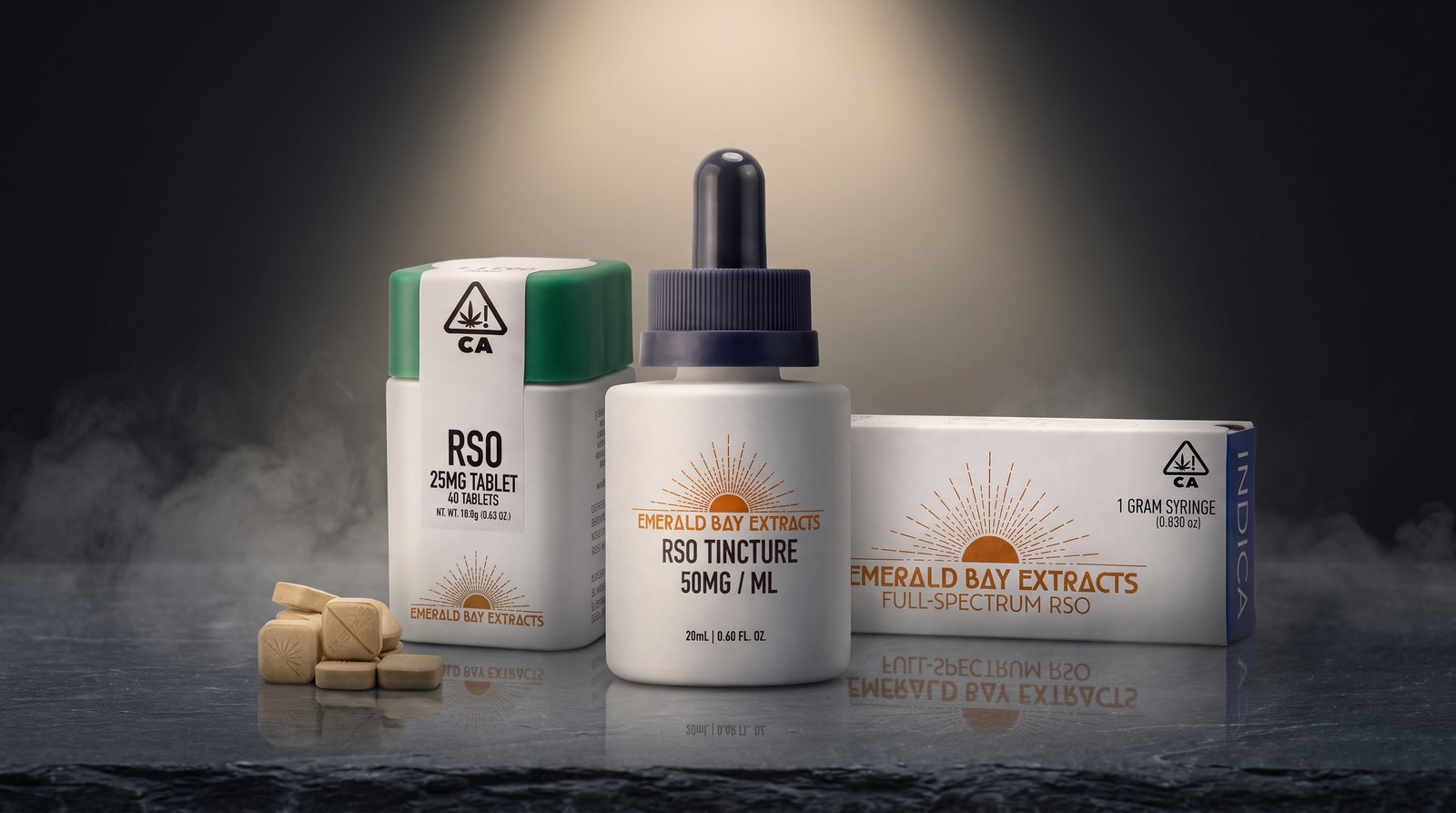
What is RSO, and where did the cancer story come from?
RSO stands for Rick Simpson Oil, a concentrated, whole-plant cannabis extract. It's sometimes called FECO (full-extract cannabis oil). Unlike distillate, RSO keeps THC or CBD together with minor cannabinoids, terpenes, and other plant compounds, and it's usually taken by mouth.
The name comes from Rick Simpson, a Canadian who began making and promoting cannabis oil in the early 2000s. He has said that applying the oil to skin lesions made them go away, and that account spread widely online. It's important to be clear about what that is: a personal anecdote. It was never documented in a medical study, there's no independent confirmation of the diagnosis or the outcome, and a single story can't tell us whether the oil had anything to do with it.
Simpson has also pointed to a 1975 study in the Journal of the National Cancer Institute, which found that THC and some other cannabinoids slowed the growth of lung tumors in mice. That study is real and historically important. It's also an animal study from fifty years ago, and its results have not been reproduced as a cancer treatment in people.
Today cannabis use among people with cancer is common. In a survey at a Seattle cancer center, about a quarter of patients reported using cannabis in the past year, and most wanted more information from their oncology providers than they were getting.
What laboratory and animal research shows
This is where the most encouraging findings live, and where most of the confusion starts.
In cell cultures and animal models, cannabinoids have been shown to slow cancer cell growth, trigger cancer cell death, and reduce the formation of blood vessels that feed tumors. A 2022 review in the British Journal of Cancer summarized these effects across many tumor types and concluded that the preclinical data justify clinical trials. The National Cancer Institute's PDQ summary on cannabis and cannabinoids describes the same body of laboratory research.
Some preclinical work has also compared whole-plant extracts with pure THC. In a 2018 study of breast cancer models, a botanical cannabis preparation was more potent than pure THC in cells and mice. That's interesting, and it's often quoted as support for full-spectrum products. It's still a study in cells and mice.
It's worth being precise about why lab results don't translate automatically. Concentrations that affect cancer cells in a dish can be far higher than what reaches a tumor after a person swallows an oil. Animal tumors don't behave like human cancers. And many compounds that look effective at this stage never work in people. That's true across all of oncology, not only for cannabis.
What human studies show, including brain cancer
Very few clinical studies have tested cannabinoids as a cancer treatment, and none has tested RSO.
Brain cancer. Glioblastoma has received the most attention. In a 2006 pilot study, THC was delivered directly into the tumors of nine patients with recurrent glioblastoma. The main goal was safety; there was no comparison group, and median survival was 24 weeks. A 2021 phase 1b trial added a THC:CBD mouth spray to standard chemotherapy (temozolomide) in patients with recurrent glioblastoma; its randomized part included just 21 people. One-year survival was higher in the cannabinoid group, but the trial was small, wasn't designed to measure effectiveness, and the authors called for a larger randomized trial. Neither study used RSO, and neither shows that cannabis treats brain cancer.
Case reports. A handful of published case reports describe individual patients who used cannabis extracts, such as a 2013 report on a teenager with leukemia. A single case, without a control group, can't separate the effect of the extract from the disease's natural course or from prior treatment.
Prostate and other cancers. People often search for evidence on Rick Simpson Oil and prostate cancer specifically. We're not aware of any clinical trial testing RSO or cannabis as a treatment for prostate cancer; the existing work is laboratory research. The same is true for pancreatic, breast, and most other cancers.
Taking this evidence together, the 2024 ASCO guideline on cannabis in adults with cancer recommends that clinicians advise against using cannabis or cannabinoids as a cancer-directed treatment unless it's within a clinical trial.
Where the evidence is stronger: symptom support
Most people with cancer who use cannabis do so for symptoms, and here the research is more useful, if more mixed than many expect.
Nausea and vomiting (CINV). This is the strongest area. A Cochrane review found that cannabis-based medicines may help chemotherapy-induced nausea and vomiting that doesn't respond to other treatments, with more side effects such as drowsiness and dizziness. The ASCO guideline states that cannabis or cannabinoids may improve refractory CINV when added to guideline-based anti-nausea regimens. Prescription cannabinoids such as dronabinol and nabilone have been used for this purpose for decades.
Appetite and weight. Many people report better appetite with THC, but controlled trials are less encouraging. In a phase III trial in patients with cancer-related appetite loss, neither a cannabis extract nor THC improved appetite or quality of life more than placebo.
Pain. Cannabinoids have reasonable evidence for some chronic non-cancer pain, but a 2020 meta-analysis of randomized trials in advanced cancer found that adding cannabinoids to opioids did not reduce cancer pain more than placebo, and increased sleepiness and dizziness.
Sleep, anxiety, and overall well-being. Many patients report benefits, and these quality-of-life goals matter. The ASCO panel concluded the evidence is still uncertain for these outcomes. That's not the same as "it doesn't help"; it means the trials haven't answered the question yet. Our article on CBD vs. THC during chemotherapy looks at symptom support in more depth.
What the research does not show, and why that matters
It does not show that RSO, or any cannabis product, cures cancer, shrinks tumors, or extends survival in people. It doesn't support the high-dose "RSO protocols" that circulate online, which call for consuming large amounts of oil over a few months; those regimens weren't developed in clinical research, and very high THC doses commonly cause heavy sedation, confusion, dizziness, and anxiety.
The biggest risk isn't the oil itself. It's delay. In a 2018 study in the Journal of the National Cancer Institute, patients with non-metastatic breast, prostate, lung, or colorectal cancer who chose alternative medicine alone, instead of conventional treatment, had about two and a half times the risk of death. Cannabis can be a reasonable part of supportive care. It shouldn't replace treatment your oncologist recommends.
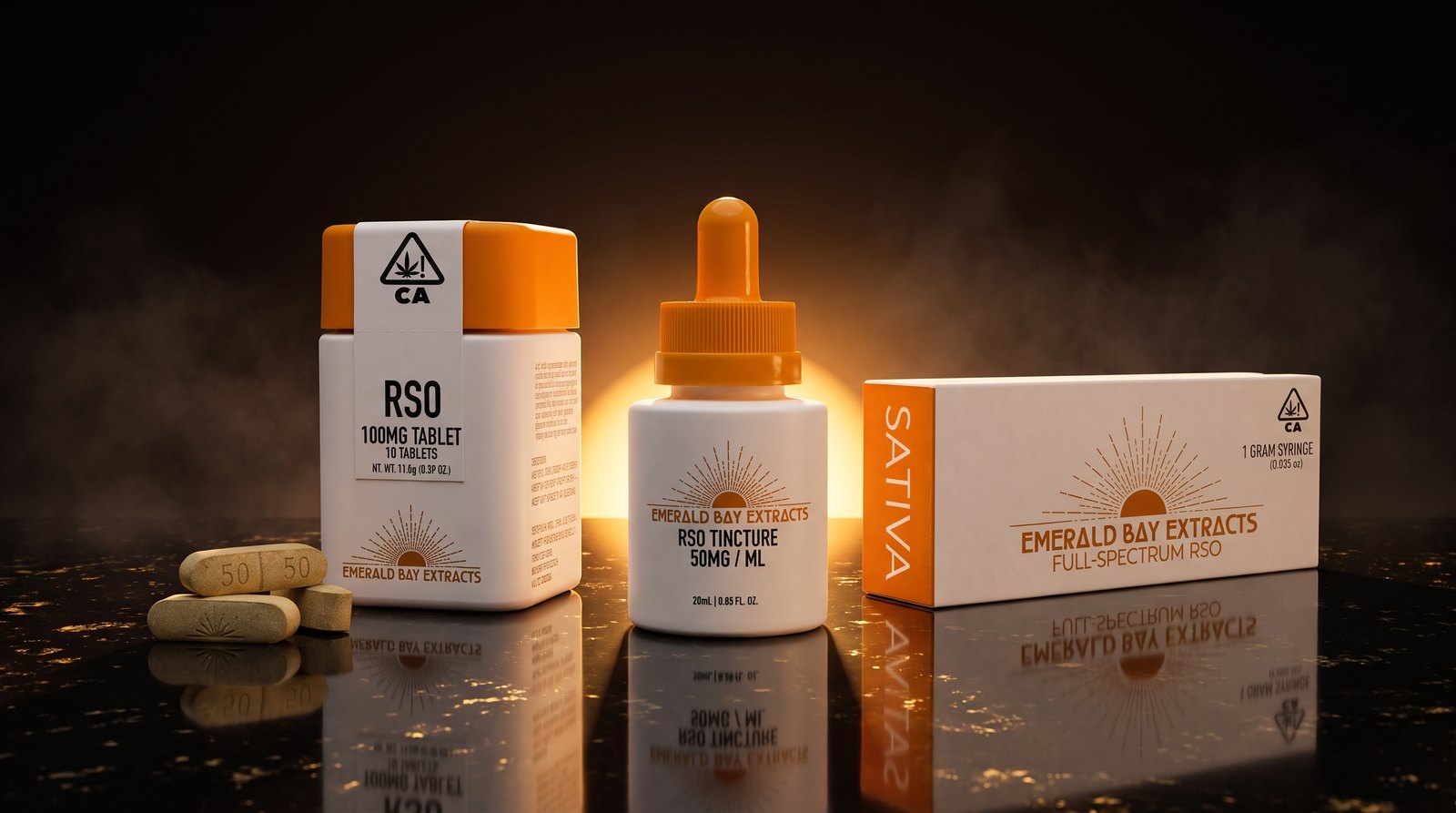
Talking to your oncology team about cannabis, and drug interactions
Many patients worry that bringing up cannabis will be judged. The ASCO guideline specifically encourages open, nonjudgmental conversations about it, and oncology teams generally prefer to know.
Here's why it matters clinically. Cannabinoids, especially CBD, are processed by the same liver enzymes as many medications and can raise or lower their levels, which may be relevant for some chemotherapy drugs, blood thinners, and sedatives. In a retrospective study of patients on the immunotherapy drug nivolumab, cannabis users had a lower tumor response rate, though survival didn't differ; the authors urged caution and further study. Cannabis can also add to the drowsiness caused by opioids and anti-nausea medications.
A few things to bring to the conversation: what product you're considering, its THC and CBD content (lab results help), how and when you'd take it, and the symptoms you're hoping it will help with. Our guide on how to talk to your doctor about cannabis has more practical suggestions.
The bottom line
The honest version of the RSO and cancer story is less dramatic than the one online, but it's more useful. Cannabinoids are a legitimate subject of cancer research, the laboratory findings are real, and they haven't yet been shown to work as a cancer treatment in people. What cannabis can offer, for some patients, is help with the hardest parts of treatment: nausea, sleep, and comfort. That's worth discussing openly, with a care team who knows your whole picture. If you and your clinicians decide cannabis has a place in your symptom care, Emerald Bay publishes lab results for every batch so you can see exactly what's in the product.
Frequently asked questions
Does RSO cure cancer?
No. There's no clinical evidence that RSO or any cannabis product cures cancer. Cannabinoids have anti-cancer effects in laboratory and animal studies, but these haven't been shown in human trials, and ASCO advises against using cannabis as a cancer treatment outside a clinical trial.
Does RSO help with nausea?
Cannabinoids have the best evidence in cancer care for chemotherapy-induced nausea and vomiting, particularly when standard anti-nausea drugs aren't enough. Those studies mostly tested prescription cannabinoids and other cannabis-based medicines rather than RSO, so talk with your care team about whether and how to add cannabis.
What is RSO used for in brain cancer?
Some people with brain tumors use RSO for symptoms such as nausea, sleep, or appetite. Two small clinical studies in glioblastoma tested THC or a THC:CBD spray, not RSO, and neither established cannabis as a treatment. Anyone with a brain tumor should discuss cannabis with their neuro-oncology team, especially because of possible interactions and effects on alertness.
What are the side effects of RSO?
THC-rich RSO commonly causes drowsiness, dizziness, dry mouth, impaired coordination, and, at higher doses, anxiety, confusion, or a racing heart. Because it's taken by mouth, effects can take up to 2 hours to begin and last many hours. Cannabinoids can also interact with other medications.
What does RSO stand for?
RSO stands for Rick Simpson Oil, named after the Canadian who popularized this style of whole-plant cannabis oil in the early 2000s. It's also called FECO, or full-extract cannabis oil.
This article is educational and doesn't provide medical advice. Cannabinoid research in cancer is still emerging; findings vary and individual responses differ. RSO is not a treatment for cancer and should never replace care recommended by your oncology team. Cannabis is for adults 21+, laws differ by location, and cannabinoids can interact with chemotherapy, immunotherapy, and other medications. Please discuss any cannabis use with the clinicians who know your full history.